Selecting a perforated sheet often begins with a seemingly simple question: which hole pattern should be used? Round and square perforations are two common choices, but their suitability depends on what the sheet is expected to accomplish.
Manufacturers and fabricators in Pune, Bhosari, Pimpri Chinchwad and other industrial locations in Maharashtra should evaluate airflow, screening requirements, structural strength and appearance before finalising a pattern.
Round Hole Perforated Sheets
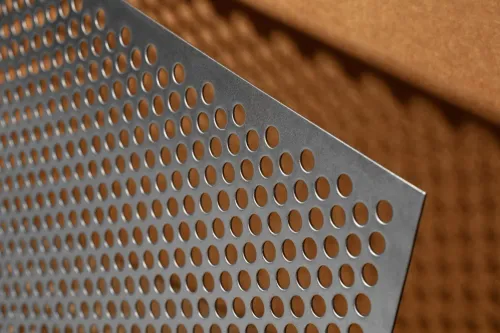
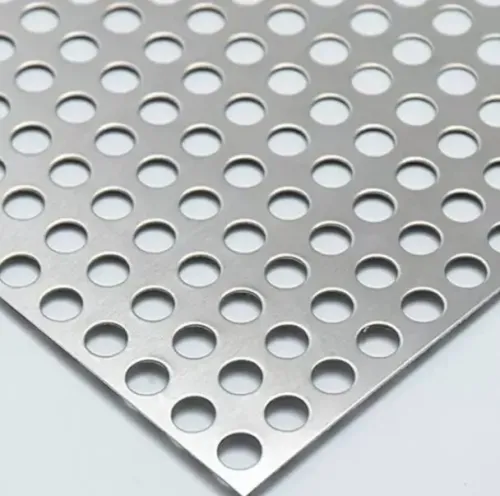
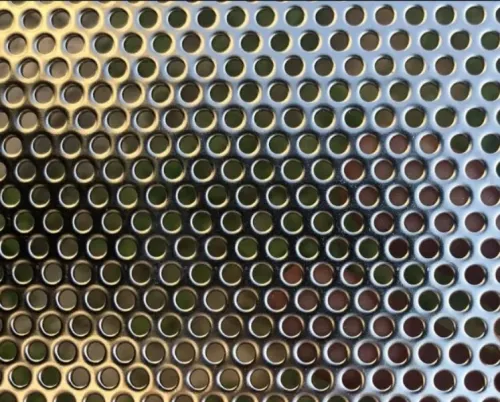
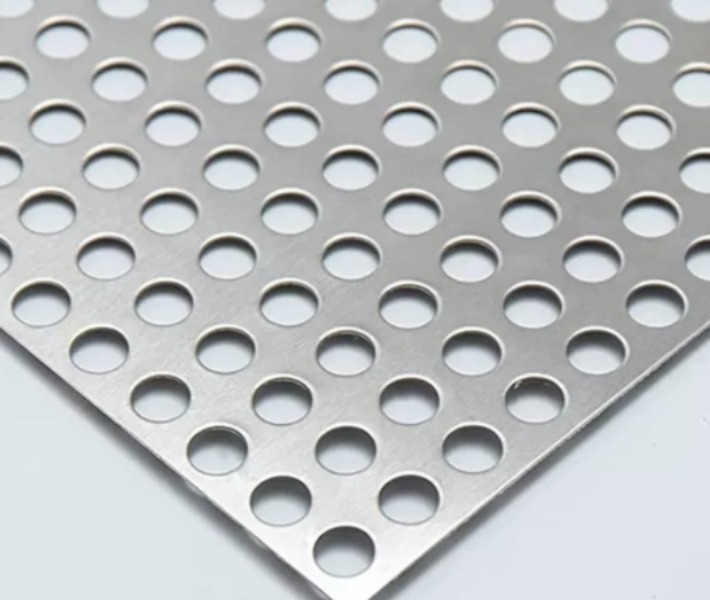
Round perforations are among the most widely used patterns because they work effectively across many industrial applications.
They are commonly found in:
- Filters
- Ventilation panels
- Machine guards
- Screens
- Acoustic products
- Equipment covers
- Agricultural processing machinery
- Architectural panels
Round holes can be arranged in straight or staggered patterns. A staggered arrangement can provide a relatively high open area while maintaining useful sheet strength.
This makes round-hole sheets particularly versatile for applications involving airflow and screening.
Square Hole Perforated Sheets
Square perforations provide a different open-area geometry and visual appearance. They can be useful where larger openings or more defined screening characteristics are required.
Typical applications include:
- Industrial sieves
- Sorting equipment
- Screens
- Ventilation systems
- Decorative panels
- Architectural applications
- Material separation systems
Square openings can also provide a distinctive appearance when perforated sheets remain visible as part of a finished structure.
How Do the Two Patterns Compare?
The correct choice depends on the application rather than one pattern being universally better.
For airflow and ventilation, round holes are frequently selected because they offer flexible open-area configurations.
For screening and separation, either option may work depending on particle dimensions and required passage characteristics.
For visual applications, square perforations may provide a more geometric appearance, while round perforations create a conventional industrial finish.
For strength, the result depends on hole size, pitch, material thickness and open area rather than hole shape alone.
Consider the Open Area
Two sheets with similar dimensions can perform very differently when their perforation percentages differ.
A sheet with greater open area may allow more air or material to pass through. However, increasing the open area reduces the amount of solid metal remaining.
Industrial buyers therefore need to consider both performance and structural requirements.
Application Conditions Should Guide Selection
Before specifying round or square perforations, consider:
- What needs to pass through the sheet?
- What needs to remain blocked?
- Is airflow important?
- Will the sheet carry a mechanical load?
- Is corrosion resistance required?
- Will the panel remain visible?
- Does the application require cleaning or frequent maintenance?
Shree Mahalaxmi Perforators manufactures perforated products for varied industrial applications. For customers across Pune and Maharashtra, discussing the end use along with hole dimensions can help establish a specification that works effectively in actual operating conditions.
The right perforation pattern is ultimately the one that provides the required balance between open area, strength, screening performance and appearance.
Keywords