Industrial machinery often generates heat during continuous operation. Electrical components, motors, compressors and other equipment may require controlled airflow to maintain suitable operating conditions. Completely enclosed metal panels can restrict that airflow, while fully open structures may leave internal components exposed.
Perforated metal sheets offer a practical middle ground.
For engineering and manufacturing facilities across Pune and industrial centres such as Bhosari, Talawade and Pimpri Chinchwad, perforated panels are commonly considered for equipment where ventilation and protection are required simultaneously.
Why Industrial Equipment Needs Ventilation
Heat can accumulate inside machinery enclosures due to electrical and mechanical operation. If the enclosure does not allow adequate circulation, internal temperatures can rise.
Ventilation openings help support:
- Heat dissipation
- Air circulation
- Cooling system performance
- Equipment reliability
- Controlled enclosure temperatures
However, simply cutting large openings into an enclosure is not always appropriate. Components may require protection against accidental contact, larger debris or external objects.
How Perforated Sheets Help
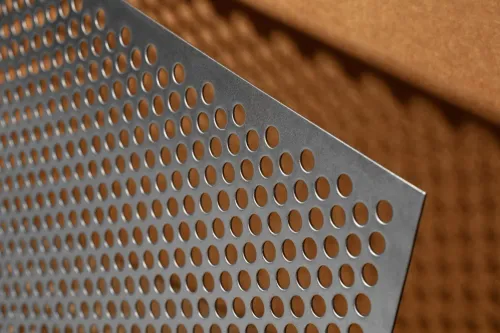
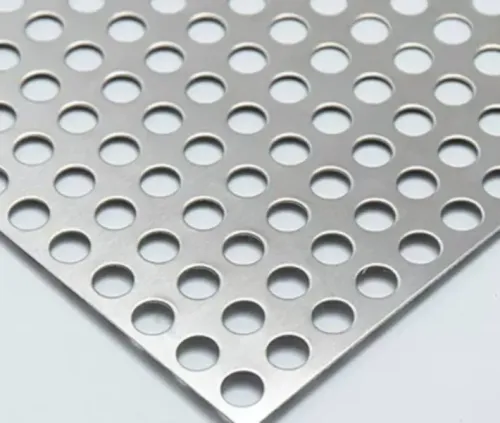
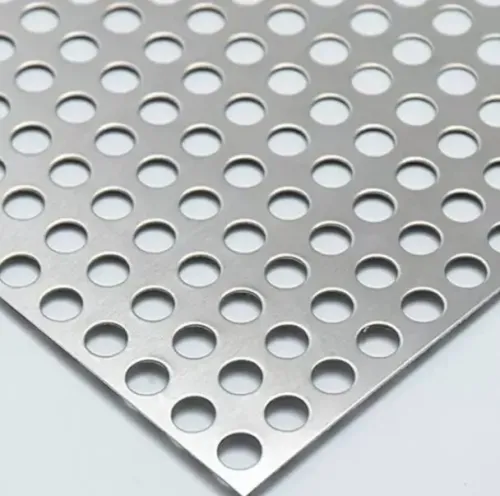
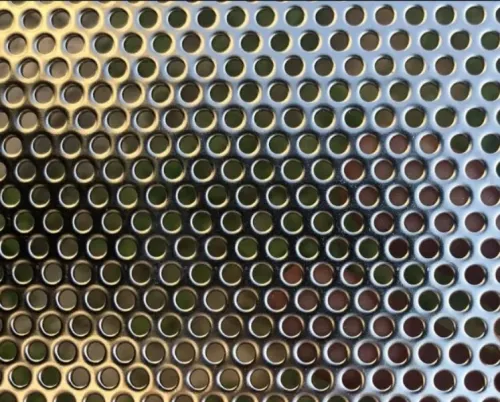
A perforated panel contains numerous controlled openings distributed across its surface.
These openings allow air to move through the enclosure while the remaining metal provides a physical barrier.
This makes perforated sheets suitable for:
- Electrical cabinets
- Machine enclosures
- Generator covers
- Compressor housings
- HVAC equipment
- Industrial fans
- Control panels
- Motor covers
The exact ventilation performance depends on the percentage of open area.
Open Area Is an Important Specification
Open area refers to the percentage of the perforated surface occupied by holes.
Increasing the open area generally allows greater airflow. However, the sheet must still provide sufficient rigidity and protection for its application.
For this reason, engineers should not choose hole diameter independently. Hole size, pitch, pattern and sheet thickness need to be evaluated together.
Hole Pattern Can Affect Performance
Round holes arranged in staggered patterns are frequently used for ventilation because they can provide an effective distribution of openings.
Straight patterns may be preferred for certain design or fabrication requirements.
Slots and other perforation shapes can also be considered where directional airflow or a particular appearance is required.
Material Matters Too
Mild steel can be suitable for many general engineering applications.
Stainless steel may be appropriate where moisture, chemicals, hygiene requirements or corrosion are concerns.
Aluminium can reduce overall component weight while providing useful corrosion resistance.
The surrounding operating environment should therefore influence material selection.
Shree Mahalaxmi Perforators works with perforated metal requirements for industrial customers in Pune and other parts of Maharashtra. When specifying ventilation panels, providing information about the equipment, environment, available panel area and airflow requirements can support better product selection.
Perforated sheets are most effective when ventilation is treated as an engineering requirement rather than simply a pattern of holes. The correct combination of material, thickness, perforation and open area can provide airflow while retaining the protective function of an equipment enclosure.
Keywords